Money sent home by family members working abroad is one of the most important financial flows in the world. For many African households it pays school fees, medical bills, rent and small businesses. Yet sending it has long been slow and expensive, with recipients travelling to a counter to collect cash. Mobile wallets are changing that: money can now land directly in a recipient's phone in seconds, often for a fraction of the old cost. This guide explains how international remittances into mobile money work, what drives the cost, the compliance behind them, and how a wallet operator can add a strong inbound and outbound remittance service.
The size of the opportunity
According to the World Bank, remittances to low- and middle-income countries run to hundreds of billions of dollars a year, larger than foreign direct investment and official development assistance combined for many countries. Sub-Saharan Africa receives tens of billions of dollars annually, and for several countries remittances are a significant share of national income.
The cost of sending them remains stubbornly high. The World Bank's Remittance Prices Worldwide database has for years shown the global average cost of sending the equivalent of 200 US dollars at roughly six percent, with Sub-Saharan Africa the most expensive region to send money to, at around eight percent on average in recent years. The United Nations Sustainable Development Goals target is three percent by 2030. Every percentage point is money that does not reach families.
Why traditional remittances are expensive
- Cash at both ends. The sender pays in cash at an agent abroad; the recipient collects cash at a counter at home. Both ends have handling, staffing and security costs.
- Many intermediaries. Money transfer operators, correspondent banks, local payout partners, each taking a fee or a foreign exchange margin.
- Foreign exchange margins that are often larger than the visible fee.
- Compliance costs of checking senders and recipients against sanctions lists and monitoring for money laundering.
- Low competition in some corridors, especially smaller ones.
How wallets change the economics
When the money lands in a mobile wallet instead of a cash counter, several costs disappear or shrink:
- No payout counter: the recipient receives funds instantly on their phone, without travelling or queuing.
- Fewer intermediaries: a remittance provider can connect directly to the wallet operator, or through a hub that reaches many wallets.
- Money stays digital: the recipient can pay school fees, bills and merchants directly, and cash out only what they need.
- Better data: KYC on the receiving wallet reduces compliance friction and supports faster screening.
Studies and industry data from the GSMA and others have consistently found that sending money to a mobile wallet is, on average, cheaper than sending cash.
How an inbound remittance into a wallet works
- The sender pays a remittance provider abroad, in an app, online or at an agent, choosing a recipient by phone number.
- Name lookup: the provider asks the receiving wallet (directly or through a hub) to confirm the phone number is active and returns the registered name for the sender to confirm.
- Screening: sender and recipient are screened against sanctions and watch lists; the transaction is checked against limits and monitoring rules on both sides.
- FX and quote: the provider converts the amount to the recipient's currency and shows the sender the exact amount that will arrive.
- Credit: the receiving wallet credits the recipient from a prefunded settlement account held for the remittance partner, and sends an SMS or in-app receipt.
- Settlement: the remittance provider tops up its prefunded account at the wallet operator, or settles in batches through the operator's bank.
On the wallet operator's ledger, each remittance partner has its own settlement account. An inbound remittance moves value from that account to the recipient, and the operator can see at any moment how much prefunding each partner has left, and alert them before it runs out.
Outbound remittances: sending from a wallet abroad
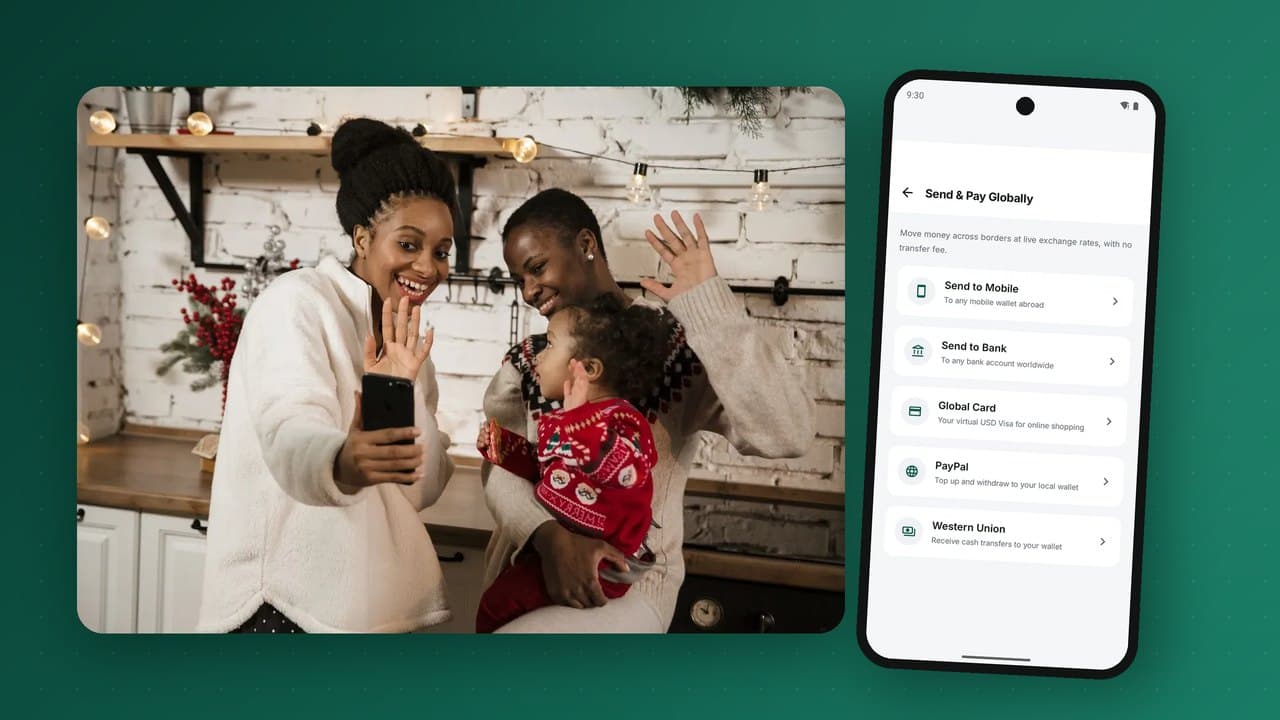
Many wallets also let customers send money out of the country, to mobile wallets or bank accounts in other markets. The flow runs in reverse: the customer pays from their balance, the operator converts currency and pays out through a partner or a hub, and the recipient is credited abroad. Outbound corridors are especially valuable for diaspora communities, cross-border traders and regional workers.
For online shopping and foreign subscriptions, some wallets add a virtual card in a hard currency, funded from the wallet balance, which lets customers pay merchants abroad who accept cards.
Compliance for cross-border flows
International transfers carry more regulatory weight than domestic ones. The essentials:
- Licensing: receiving international remittances usually requires a partnership with a licensed remittance provider and, in some markets, specific approval from the central bank. Outbound remittances often need an additional licence or a licensed partner.
- KYC on both sides: the sender's provider verifies the sender; the recipient's wallet verifies the recipient. Higher amounts may need higher KYC tiers.
- Travel rule information: originator and beneficiary details must accompany the transfer, in line with FATF recommendations and local rules.
- Sanctions screening of both parties in real time.
- Monitoring for structuring, unusual corridors, many senders to one recipient, and rapid cash-out after receipt.
- Foreign exchange regulations: rules on which rates may be used, reporting of flows, and limits per transaction or per period.
Pricing and FX transparency
Customers increasingly compare not the fee but the amount that arrives. Good practice:
- show the exchange rate and the recipient amount before confirmation;
- keep the FX margin reasonable and consistent;
- make receiving free for the recipient;
- offer low fees on the small amounts most migrants send frequently.
Transparency builds loyalty in a market where people send money every month for years.
What recipients do with the money
The real value of wallet remittances shows after the money arrives. Recipients can:
- pay school fees and utility bills directly;
- save part of it in a savings pocket or a group savings account;
- pay merchants without cashing out;
- build a transaction history that supports credit later;
- cash out only what they need, at an agent nearby.
Some providers let senders direct funds to a specific purpose, such as paying a school or a hospital directly, which gives the sender confidence that money is used as intended.
Building a remittance service as a wallet operator
- Choose partners: money transfer operators and hubs that serve your main diaspora corridors.
- Set up settlement: prefunded accounts per partner, in the right currencies, and a daily reconciliation against partner reports.
- Integrate: name lookup, credit and status APIs, signed callbacks, idempotency and clear pending states. See how we treat external rails in interoperability.
- Configure limits and monitoring for cross-border flows, linked to KYC tiers.
- Design the recipient experience: instant credit, a clear SMS showing sender name and amount, and in-app history.
- Market to senders abroad with partners, and to recipients at home through agents.
Where the money goes: an illustrative cost breakdown
Senders see a fee and an exchange rate; the cost underneath is spread across the chain. The example below is illustrative, for a transfer equivalent to 200 US dollars, to show where each part goes and where wallets save money:
| Component | Cash-to-cash | Account-to-wallet |
|---|---|---|
| Sender-side collection (agent or card) | Agent commission and cash handling | Card or bank fee, often lower |
| Transfer operator margin | Present | Present |
| Correspondent and settlement costs | Often several intermediaries | Fewer, if the operator connects directly or through a hub |
| Payout | Counter staff, cash, security, recipient's travel | Instant credit to the wallet |
| FX margin | Often the largest hidden cost | Still present; more competitive where corridors are digital |
The biggest savings come from digitising both ends. Account-to-wallet corridors remove physical cash handling entirely and invite more competition, which pushes FX margins down.
Choosing corridors
A wallet operator cannot connect to every country at once. Prioritise corridors with data:
- Where your customers' relatives live and work: diaspora communities abroad and neighbouring countries with labour migration.
- Existing inflows: many customers already receive cash remittances and cash them in; that volume can move straight into the wallet.
- Partner availability: money transfer operators and hubs that already serve the corridor and can connect quickly.
- Regulatory feasibility in both countries.
- Cross-border trade: traders who pay suppliers across a border need outbound transfers as much as families need inbound ones.
Managing prefunding and FX risk
Behind every instant credit sits a funding decision. The receiving operator credits recipients from a partner's prefunded balance; if that balance runs out, transfers stop. Operators and partners manage this with:
- low-balance alerts to partners well before prefunding runs out;
- daily settlement cycles sized to typical volumes, with buffers before holidays when remittances peak;
- clear rules for what happens when prefunding is insufficient: queue, reject or credit against a limit;
- for outbound flows, FX positions managed daily so the operator is not exposed to large currency moves.
Remittances peak predictably: before school terms, at month-end, and ahead of major holidays. Plan liquidity for both prefunding and agent cash-out at those times.
Designing the recipient experience
The recipient is often older, less digitally confident and in a rural area. Small design choices matter:
- an SMS in the recipient's language naming the sender, the amount received in local currency and the new balance;
- no action needed to accept funds, and no fee to receive;
- a clear route to cash out at an agent nearby, and enough agent liquidity on peak days;
- a simple way to reply to the sender with a thank-you or confirmation, which builds trust in the channel;
- options to pay school fees or bills directly from the received funds.
A launch checklist for an inbound remittance service
- Regulatory approval or partner arrangement confirmed for receiving international transfers.
- Partner agreements signed for priority corridors, including settlement terms and service levels.
- Prefunded settlement accounts set up per partner, with alerts.
- Name lookup, credit, status and callback APIs tested end to end, including timeouts.
- Screening and monitoring rules configured for cross-border flows.
- Recipient limits mapped to KYC tiers, with an easy upgrade path.
- Recipient SMS templates in every launch language.
- Daily reconciliation against partner reports.
- Agent liquidity plans for peak remittance days.
Trends to watch
- Regional payment systems such as PAPSS aim to let African countries pay each other in local currencies, reducing reliance on correspondent banks.
- Wallet-to-wallet corridors between African operators, bypassing cash entirely.
- Real-time FX and stablecoin-based settlement being explored by some providers for faster, cheaper settlement between partners, subject to regulation.
- Purpose-directed remittances to schools, hospitals and utilities.
- Remittance-linked savings and credit, using a history of regular inflows to underwrite loans.
The sender's journey
The sender abroad is the one choosing the service, so their experience decides which corridors grow. A strong sender journey looks like this:
- The sender opens an app or website and enters the recipient's phone number.
- The recipient's registered name appears, so the sender knows the number is right.
- The sender sees exactly how much will arrive in local currency, including the rate and all fees, before paying.
- They pay by card, bank transfer or wallet.
- Within seconds they see confirmation that the money has been credited, not just sent.
- The recipient receives an SMS with the amount and the sender's name.
Two moments build trust above all: the name confirmation before paying and the credit confirmation after. Both depend on real-time integration with the receiving wallet.
How to measure a remittance service
- Volume and value by corridor, and growth month on month;
- Time to credit from sender payment to recipient credit;
- Success rate, and the reasons for failures, such as unregistered numbers or limits;
- Share of received funds kept in the wallet after seven days, which shows whether recipients use the wallet beyond cash-out;
- Repeat senders, the clearest sign of a trusted corridor;
- All-in cost for a standard amount, compared with competitors in the corridor.
Common mistakes in remittance corridors
- Hiding the exchange rate margin. Senders compare, and hidden margins destroy trust when discovered.
- Credit without notification. Recipients who do not know money has arrived call the sender, who then doubts the service.
- Launching without liquidity. Receiving agents need cash on the days remittances peak, especially before holidays.
- Treating compliance as an afterthought. A partner that cannot answer screening questions quickly will lose its banking relationships, and the corridor with them.
Key terms in remittances
| Term | Meaning |
|---|---|
| Corridor | A pair of sending and receiving countries, such as United Kingdom to Kenya. |
| Sending partner | The regulated money transfer operator or bank that collects funds from the sender abroad. |
| Receiving partner | The wallet provider or bank that credits the recipient in the destination country. |
| FX margin | The difference between the rate given to the customer and the wholesale market rate. |
| All-in cost | Fees plus FX margin, expressed as a share of the amount sent; the figure used in global comparisons. |
| Pre-funding | Money placed in advance with the receiving partner so credits can be paid immediately. |
| Sanctions screening | Checking senders and recipients against official sanctions lists before a transfer completes. |
| Originator information | Details about the sender that must travel with a cross-border payment under international standards. |
| Hub | An aggregator connecting many sending partners to many receiving wallets through one integration. |
Frequently asked questions
Can I receive money from abroad directly into a mobile wallet?
Yes, in many markets. The sender chooses mobile wallet delivery with a remittance provider that is connected to your wallet operator.
Is it cheaper than collecting cash?
On average, yes. Sending to a mobile wallet removes payout counter costs and often intermediaries.
How long does an international transfer to a wallet take?
Usually seconds to minutes once the sender has paid, compared with hours or days for some cash services.
Does the recipient need a bank account?
No. A registered mobile money account at the right KYC level is enough.
What limits apply?
Limits depend on the regulator, the corridor and the recipient's KYC tier. Higher tiers usually allow larger amounts.
PesaBridge lets your customers send money abroad to mobile wallets and bank accounts, and pay online with a virtual USD card, while every partner rail plugs in as an adapter behind one double-entry ledger with KYC-tier limits and AML screening hooks. See the platform or talk to our team about your corridors.