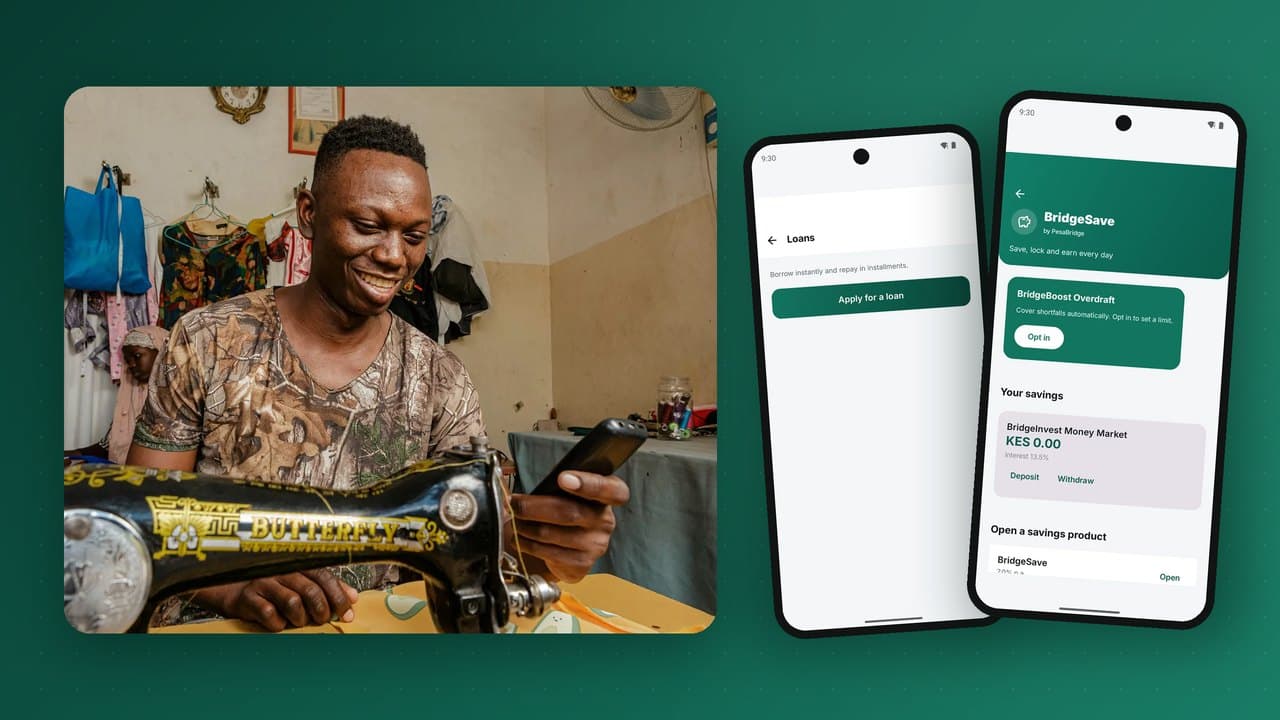
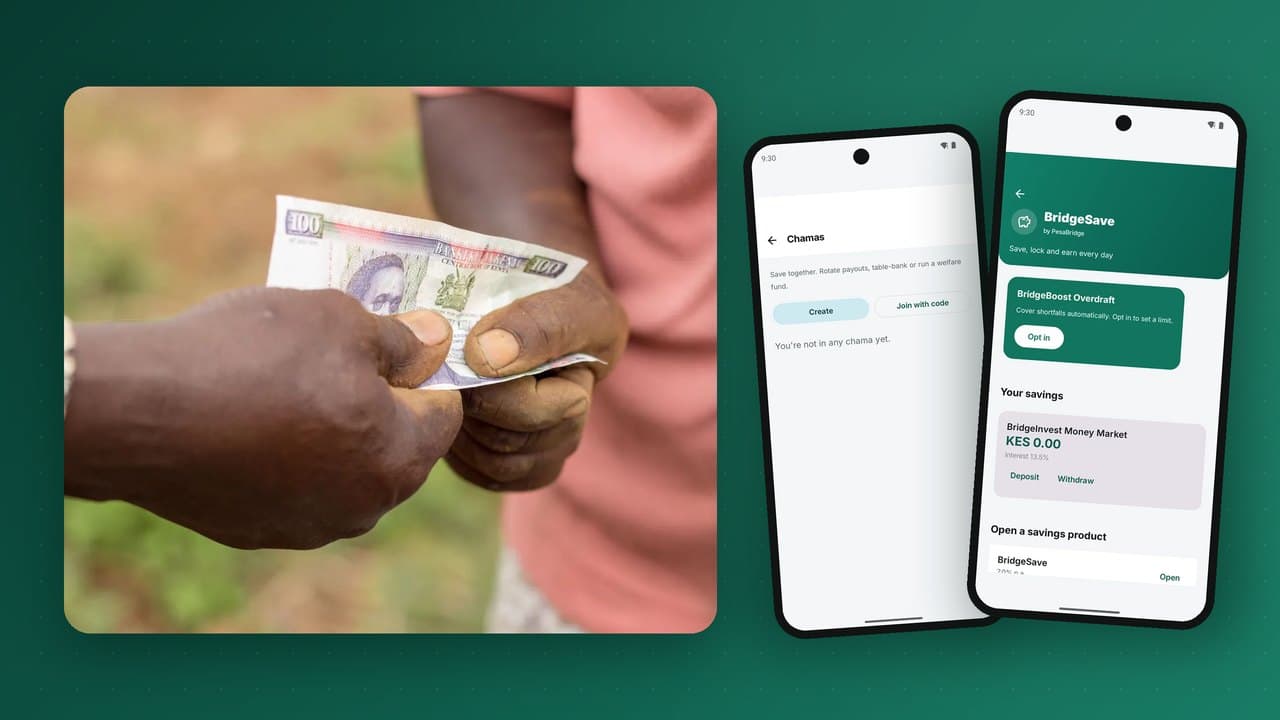
Long before mobile money, people across Africa were already running sophisticated financial systems of their own: savings groups. In Kenya they are called chamas; elsewhere they go by names like stokvels, tontines, susu, esusu, ajo, ikub and VSLAs. Members meet regularly, contribute a fixed amount, and either rotate the pot to one member each cycle or build a shared fund that lends to members. These groups are built on trust and social accountability, and they hold enormous amounts of savings. Yet most still run on notebooks, cash boxes and a treasurer's memory. This guide explains how savings groups work, what goes wrong when they run on cash, and how to design a digital chama product that members actually trust.
How savings groups work
There are two classic models, and many groups combine them:
| Model | How it works | Common names |
|---|---|---|
| Rotating (merry-go-round) | Each member contributes the same amount every period; the whole pot goes to one member, rotating until everyone has received it once | ROSCA, merry-go-round, tontine, susu, ajo, stokvel |
| Accumulating (savings and loans) | Contributions build a common fund; members borrow from it and repay with interest; the fund and its earnings are shared out at the end of a cycle | VSLA, ASCA, investment chama |
Groups also often keep a welfare fund for emergencies such as funerals or illness, and some pool money to invest in land, shares or a joint business.
The rules are what make them work: fixed contribution dates, fines for lateness, a clear order of payout, lending limits and a transparent record read out at meetings. The group itself enforces discipline through relationships.
What goes wrong on cash and notebooks
- Cash risk: the treasurer or a member carries the pot home; theft and loss are real.
- Record disputes: a smudged notebook or a missing page, and members disagree about who paid what.
- Treasurer fraud or mistakes, which can destroy a group and friendships along with it.
- Distance: members who move to another town, or work abroad, struggle to contribute.
- Idle money: accumulated funds sit in a box or a basic account earning nothing.
- No credit history: years of disciplined saving and repayment leave no record a lender can use.
Mobile money solved part of this: many groups now collect contributions to the treasurer's personal wallet. But that creates a new problem: the group's money is mixed with one person's money, with no transparency for the others.
What a digital chama product must do
A good digital chama is not a shared wallet. It is a group account with rules, roles and a transparent record that every member can see.
1. A group account separate from any individual
The group's money sits in its own account on the ledger, not in the chairperson's or treasurer's wallet. Members contribute directly from their own wallets, including over USSD from basic phones.
2. Roles and approvals
Groups have officials: chair, treasurer, secretary. Withdrawals and loans from the group account should require approval by more than one official, a maker-checker model familiar from corporate banking. No single person can move the group's money alone.
3. Rules the system enforces
- contribution amount and schedule, with reminders before each due date;
- fines for late or missed contributions, applied automatically or by officials;
- payout order for rotating groups;
- loan rules: maximum multiple of savings, interest rate, repayment period;
- welfare fund contributions and eligibility.
4. Full transparency
Every member can see every contribution, fine, loan, repayment and withdrawal, and their own position, at any time. This single feature removes most of the disputes that break groups apart.
5. Meetings still matter
Digital does not replace the meeting; it makes it better. A meeting summary with who paid, who owes, and the current fund balance can be generated for the secretary to read out or share.
The ledger design
Behind the screens, a chama needs careful accounting:
- a group account holding pooled funds;
- member sub-ledgers recording each member's contributions, fines, loans and share of the fund;
- loan accounts for member loans from the group, with interest accruing to the group;
- a welfare pool tracked separately;
- share-out calculations at the end of a cycle, distributing the fund and earnings in proportion to each member's savings.
Every movement posts balanced entries on a double-entry ledger, so the group account always equals the sum of members' positions plus undistributed earnings. That is exactly the proof a treasurer could never easily give with a notebook.
Contributions from any phone
Many members will be on basic phones. Contributions, balance checks and loan requests must work over USSD, not only in a smartphone app. Reminders by SMS before each due date noticeably improve on-time contributions. See reaching the feature phone with USSD.
Personal savings goals alongside the group
Members often want to save individually too: for school fees, a phone, rent, a business. Personal savings pockets or locked savings goals in the same wallet complement the group. Some products let members automate a small saving whenever money comes in, or round up purchases into savings. Combining personal and group savings gives a fuller picture of a member's financial discipline.
From savings history to credit
A chama member who has contributed on time for two years and repaid three group loans is a strong credit risk, and a digital record finally makes that visible. With the member's consent, that history can support:
- larger loans from a partner bank or microfinance institution to the individual;
- group loans to the chama as a whole, backed by its savings and track record;
- better pricing for groups with strong records.
More on credit design in digital lending on mobile wallets.
Investment groups
Many chamas evolve into investment clubs that buy land, shares, government securities or businesses. Digital tools help with:
- pooling contributions for a specific investment with a target and a deadline;
- recording each member's share of an investment;
- distributing returns proportionally;
- keeping minutes and approvals for investment decisions.
Why operators should care
For a bank, SACCO, telco or fintech, savings groups are a powerful channel:
- Deposits: groups hold large, stable balances.
- Activity: weekly contributions from every member create habitual transactions.
- Acquisition: one group can bring 20 or 30 active customers at once.
- Trust: a group that sees its money safe and transparent becomes an advocate.
- Credit: group histories are some of the best data for responsible lending.
Designing for trust: lessons from the field
- Never let one person control the money. Multi-official approval is non-negotiable.
- Mirror the group's own rules rather than imposing a standard template; groups differ.
- Make every member's view complete, not only the officials'.
- Support basic phones for every core action.
- Keep fees low or zero on contributions; charge on withdrawals or loans if at all.
- Help groups migrate: let them record opening balances and past history so they do not start from zero.
The four kinds of chama, and what each needs from software
Savings groups are not one product. In practice, four patterns cover almost every group, and a digital product should support each on its own terms rather than forcing them into one template.
Merry-go-round
Every member contributes the same amount on the same schedule, and the full pot goes to one member each cycle in an agreed order. What the software must do: hold the rota, collect contributions on the due date, pay the right member once all contributions are in (or at a fixed time), apply fines to late members and show everyone where the cycle stands. The critical rule is fairness of order; changes to the rota should need the group's agreement, recorded in the system.
Table banking
Contributions accumulate in a fund, and members borrow from it at an agreed interest rate, usually up to a multiple of their savings. Interest earned returns to the fund and is shared at the end of the cycle. What the software must do: track each member's savings, calculate their borrowing limit, disburse and track loans with repayment schedules, accrue interest to the group, and compute a fair share-out at the end, in proportion to savings and time.
Investment
Members pool money for a specific investment: land, shares, a vehicle, a business. What the software must do: set a target and deadline, record each member's share, keep minutes of decisions, and distribute returns in proportion to shares.
Welfare
Members contribute to a fund that pays out when a member faces an emergency, such as a bereavement or hospitalisation. What the software must do: define eligible events, record claims, approve them according to group rules and pay out quickly, because welfare payments are usually urgent.
Many real groups run two or more of these at once, for example a merry-go-round alongside a welfare fund. The product should let one group hold several pools, each with its own rules and balance.
A worked example: a 20-member merry-go-round
Consider a group of 20 market traders who each contribute 1,000 every Friday. Every week, one member receives the pot of 20,000. Over 20 weeks, everyone contributes 20,000 and receives 20,000 once.
On paper this looks like zero-sum saving, but the value is real: each member gets a lump sum they could not easily have saved alone, early members effectively receive an interest-free loan from the group, and later members get disciplined savings. Here is how a digital version runs:
- The group registers, adds members by phone number and sets the rota, perhaps by drawing lots at the first meeting.
- Every Thursday, each member gets a reminder: "Your contribution of 1,000 is due tomorrow."
- On Friday, members contribute from their wallets, pulled into the group's pool wallet, or pay at an agent if they hold cash.
- Once all 20 contributions are in, the pot pays to the week's recipient automatically, with a notification to everyone.
- A member who pays late is fined the amount the group agreed, recorded against their name.
- Every member can see the full history: who paid, who received, who owes fines.
The treasurer's job changes from carrying cash and keeping a notebook to checking a dashboard and following up with late members. The group's biggest risk, one person holding everyone's money, disappears.
Moving a group from notebook to digital, step by step
- Agree at a meeting. Groups make decisions together. Present the change at a meeting, answer questions, and let the group vote.
- Capture the constitution. Contribution amounts, dates, fines, loan rules, welfare rules and officials. The system's settings should mirror what the group already does.
- Register members with their phone numbers and roles. Members without a wallet can open one at an agent the same day.
- Record opening balances. Enter each member's existing savings and any outstanding loans, agreed and signed off by the group, so history is not lost.
- Move the money from the treasurer's box or account into the group's pool wallet, visible to all.
- Run the first cycle together. Help members make the first contribution at the meeting, so everyone sees it work.
- Keep the meeting and use the system's summary as the agenda.
Governance: preventing the disputes that break groups
Most chamas that fail do so over money disputes, not bad investments. Digital tools help most when they reinforce good governance:
- Clear roles: who can request a payout, who can approve it, who can change settings.
- Visible rules: the constitution available to every member in the app.
- Complete history: no transaction can be edited or deleted; corrections are new entries with reasons.
- Member exits: a defined process for a member leaving, including how their savings and any loans are settled.
- Dispute resolution: the record is the first reference point, which settles most arguments before they start.
Measuring a chama product
For the operator, the health of a group savings product shows in a few numbers:
- Active groups, with contributions in the last cycle, and average members per group;
- On-time contribution rate, which reflects both group discipline and the usefulness of reminders;
- Balances held by groups, and how long funds stay;
- Member loans issued and repaid within groups, where the product supports them;
- Group retention from one cycle to the next;
- Member activation: how many chama members start using the wallet for other payments.
The last number is often the most valuable. A chama brings people into the wallet for a regular contribution; good products turn them into everyday customers.
Common mistakes when digitising groups
- Replacing the meeting. The meeting is where trust is built and decisions are made. Digital tools should support it with accurate records, not try to make it unnecessary.
- Letting officials use personal wallets for group money. Group funds held in a treasurer's own wallet are mixed with personal money and disappear with the treasurer. The group needs its own account.
- No plan for members who leave. Groups need a clear way to calculate and pay out a departing member's share, including any loans they still owe.
- Ignoring next of kin. When a member dies, the group must know who receives their savings. Record a nominee from the start.
- Skipping training for officials. Officials who do not understand the tool fall back to notebooks within weeks. A short session at the first meeting prevents it.
Key terms in group savings
| Term | Meaning |
|---|---|
| Chama | A Kenyan term for an informal savings or investment group; similar groups exist across Africa under many names. |
| ROSCA | Rotating savings and credit association: members contribute and one member receives the pot each cycle. |
| ASCA | Accumulating savings and credit association: contributions build a fund that lends to members. |
| Merry-go-round | The common East African name for a rotating group. |
| Official | An elected chair, treasurer or secretary who manages the group's affairs. |
Frequently asked questions
What is a chama?
A chama is a Kenyan savings group whose members contribute regularly to a common pool, either rotating the pot among members or building a fund that lends to members and invests.
Is it safe to keep a chama's money in a mobile wallet?
It is safest in a dedicated group account with multi-official approval, not in an individual official's personal wallet.
Can members contribute from a basic phone?
Yes, if the product supports USSD for contributions, balances and loan requests.
Can a chama borrow as a group?
Yes. A digital record of savings and repayment makes group loans from banks and microfinance institutions easier to approve.
PesaBridge runs four kinds of chama in the customer wallet (merry-go-round, table banking, investment and welfare), each with its own pool wallet, member roles, contributions pulled from members' wallets, payouts per cycle, fines, welfare claims and member loans, alongside flexi, locked and money-market savings that earn interest daily, all on a double-entry ledger. See savings and chamas or request test access.