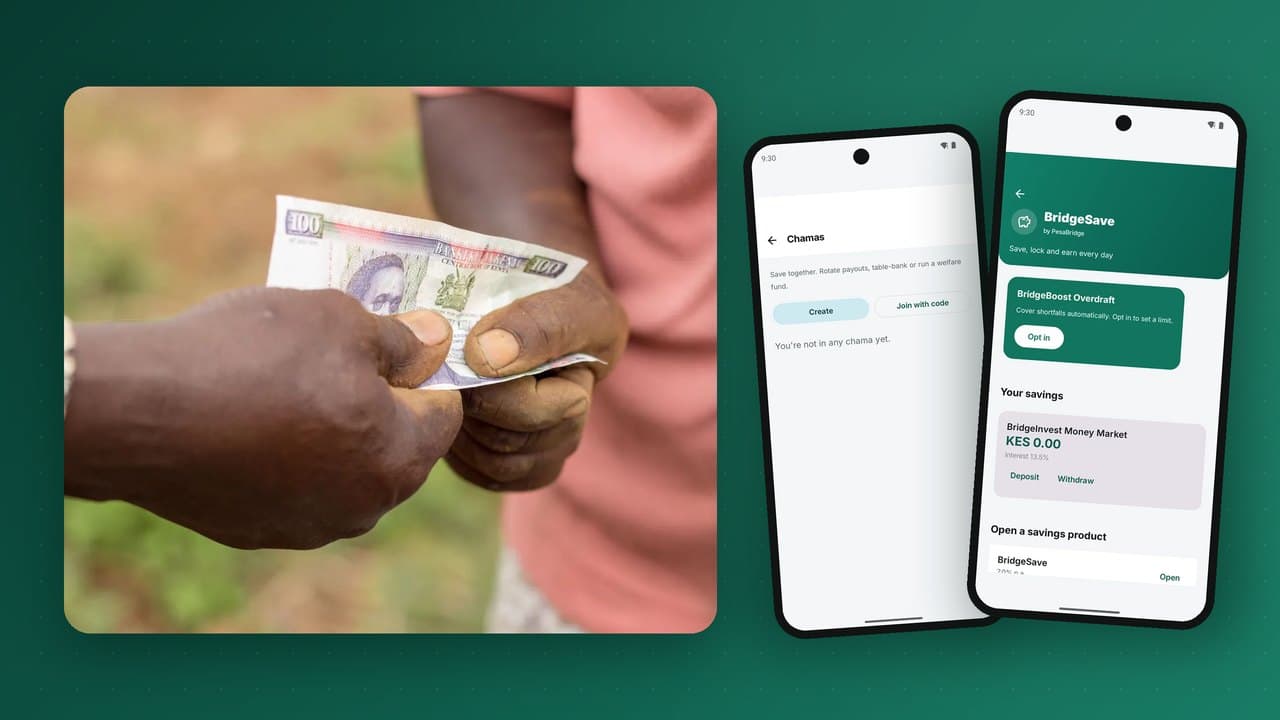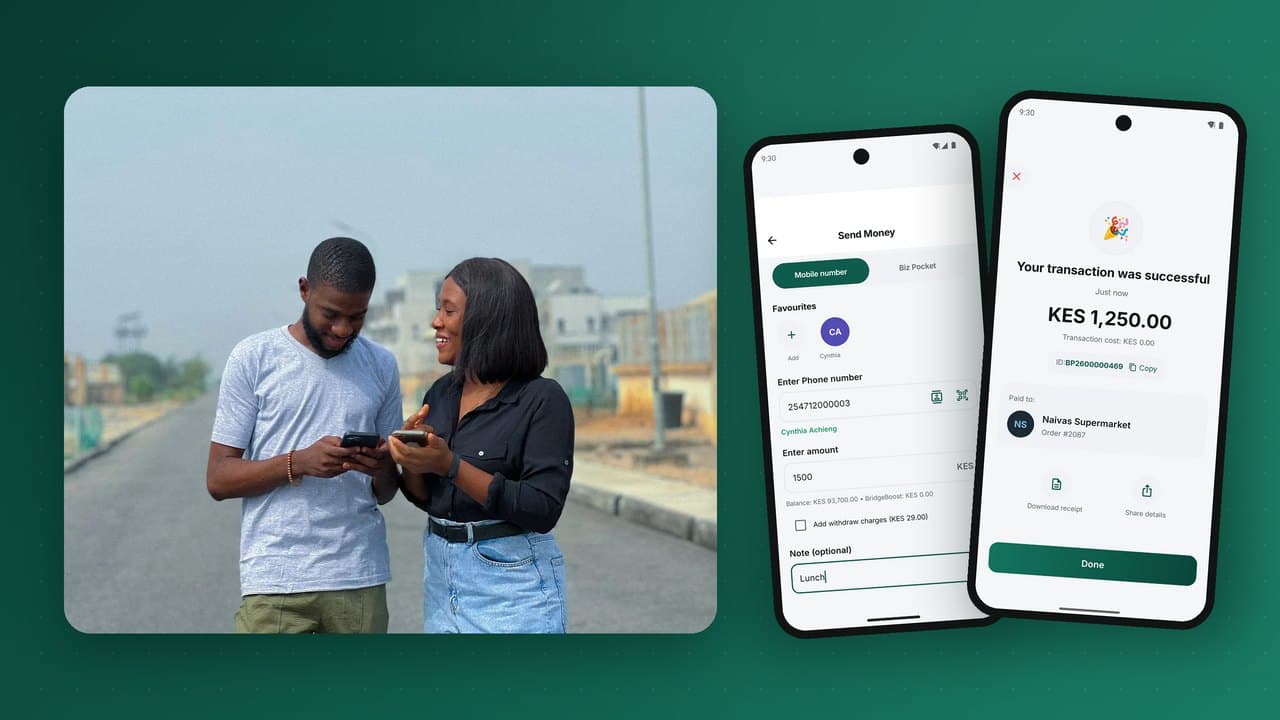
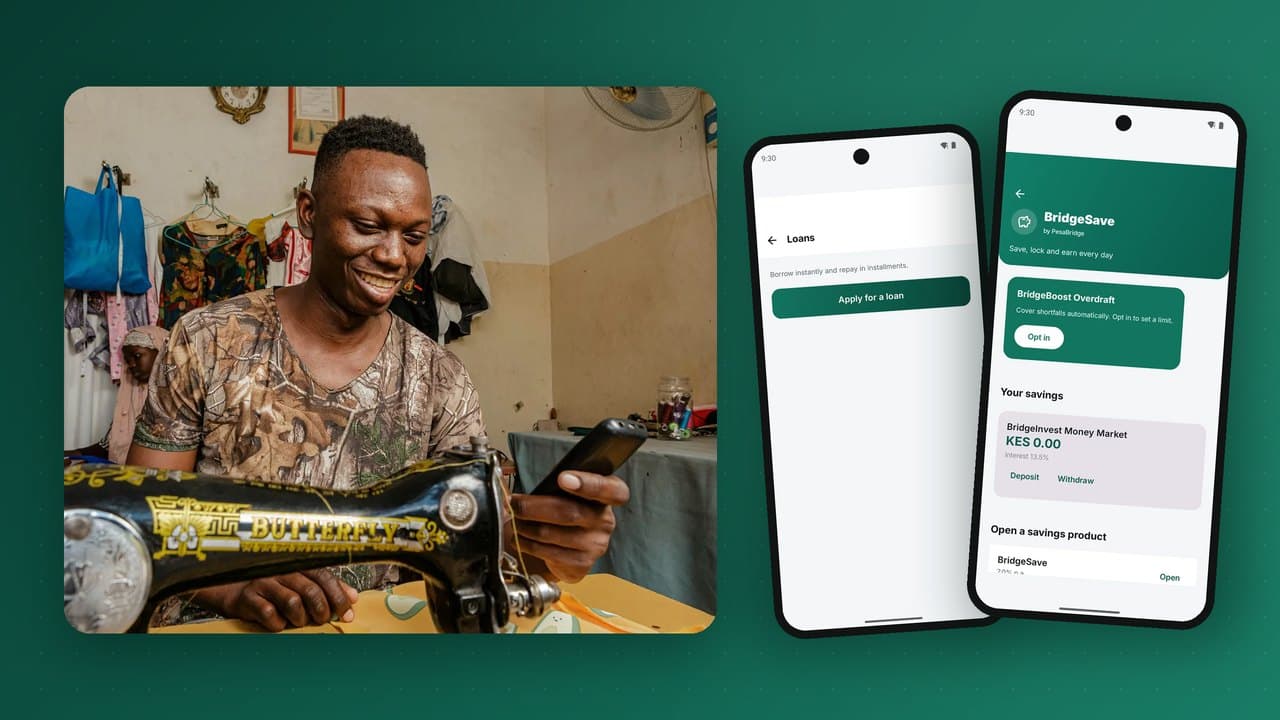
Once people keep and move their money in a mobile wallet, the next thing they ask for is credit: a little extra to finish paying school fees, restock a shop or get through the week before payday. Wallets are uniquely placed to offer it, because their transaction history reveals how people actually earn and spend. Done well, wallet-based lending is one of the most powerful tools for financial inclusion. Done badly, it traps borrowers in debt and destroys trust in the whole service. This guide covers the product types, how credit decisions are made, the ledger and operations behind them, and the responsible lending practices regulators now expect.
Why wallets can lend where banks could not
Traditional lenders rely on payslips, collateral and credit bureau records. Most customers of mobile money have none of these. What they do have is a stream of transactions: money received from employers, customers and relatives; airtime purchases; bill payments; merchant sales; savings. That stream shows regularity of income, spending discipline and resilience. It is, in effect, an alternative credit file, updated every day.
Wallets also solve the two most expensive parts of small loans: disbursement and collection. Money can be sent to the borrower instantly, and repayments can be collected from incoming funds automatically, without branches or loan officers.
The main wallet credit products
| Product | How it works | Typical use |
|---|---|---|
| Overdraft | The customer can complete a payment even when their balance is short; the shortfall is repaid automatically from the next incoming money | Finishing a bill payment or purchase |
| Short-term nano loan | A small loan disbursed to the wallet and repaid in one or a few instalments over days or weeks | Emergencies, stock, school fees |
| Instalment loan | A larger loan repaid over months | Assets, business growth |
| Merchant and agent working capital | Credit tied to sales or float, repaid from daily takings | Restocking, agent float |
| Buy now, pay later | Pay a merchant now and repay in instalments | Phones, appliances, school supplies |
| Group or chama loans | Loans to members from a group's pooled savings, approved by the group | Member needs within savings groups |
Most operators start with an overdraft or a small nano loan, because the amounts are low, the cycle is short and repayment behaviour becomes visible quickly.
Who actually lends
In most markets a mobile money provider cannot lend customers' e-money; those funds are held in trust. Credit is usually provided by:
- A partner bank that funds the loan book and holds the credit risk, with the wallet as the channel.
- A licensed digital credit provider or microfinance institution partnering with the wallet.
- The wallet operator itself, if it holds an appropriate lending licence and uses its own capital.
Regulators in several African countries have introduced specific rules for digital lenders in recent years, covering licensing, pricing disclosure, data use and debt collection practices. Know the rules in your market before launch.
How a credit decision is made
1. Eligibility
Basic rules decide who can be scored: account age, KYC tier, recent activity, no current arrears, not on a blacklist.
2. Scoring
A scorecard or model estimates the probability of repayment from wallet data. Useful signals include:
- regularity and size of inflows (salary-like patterns, merchant receipts);
- average and minimum balances over time;
- bill payments made on time;
- airtime purchase patterns;
- savings behaviour;
- previous loan history and repayment timeliness;
- tenure and stability of phone number and device.
Start simple. A transparent scorecard built on a few strong signals, validated against real repayment outcomes, often beats a complex model trained on too little data, and it is much easier to explain to a regulator.
3. Limit setting
The score maps to a credit limit. Good practice is to start new borrowers with small limits and increase them step by step as they repay on time. Limits should also consider affordability: how much the customer can repay from typical inflows without hardship.
4. Pricing
Fees and interest must cover the cost of funds, expected losses, operations and margin, and must be disclosed clearly. Several regulators now require a clear statement of the total cost of credit before the customer accepts.
The ledger behind a loan
A loan is not a negative wallet balance. It is a separate account with its own lifecycle, and the ledger must represent it properly so that finance, the lender and the regulator can trust the numbers:
- Disbursement: the lender's funding account is debited, the customer's wallet credited, and a loan receivable account created for the customer.
- Fees and interest accrue to the loan account according to the product's rules.
- Repayment: the customer's wallet is debited (manually or automatically from incoming funds) and the loan account reduced.
- Arrears: overdue amounts move into aging buckets that drive reminders, penalties (where allowed) and provisioning.
- Write-off and recovery: uncollectable loans are written off with an audit trail; later recoveries are posted separately.
Every step posts balanced entries on a double-entry ledger, so the loan book always reconciles to the lender's funding and to customer balances.
Automatic repayment: powerful and sensitive
Collecting repayments automatically from incoming funds is the feature that makes wallet lending viable. It must be designed carefully:
- tell the customer clearly, before they borrow, that repayments will be deducted from incoming money;
- deduct only what is due, not everything that arrives;
- consider leaving a minimum balance for essential spending;
- send a receipt for every deduction;
- never deduct from funds that are legally protected or designated for another purpose.
Responsible lending: what good looks like
Digital credit has had well-documented problems: borrowers taking multiple loans from different apps to repay each other, aggressive collection tactics, and unclear pricing. Regulators have responded, and customers remember which brands treated them fairly. Responsible practice includes:
- Clear disclosure of total cost, due dates and consequences of late payment, before acceptance.
- Affordability checks, not just probability-of-default scores.
- Gradual limits that grow with good behaviour.
- Cooling-off options for new borrowers.
- Respectful collections: reminders and restructuring options, never public shaming or contacting a borrower's phone contacts.
- Accurate credit reporting, including positive history, so good borrowers benefit.
- Data protection: using only data customers have consented to, for purposes they understand.
Lending to merchants and agents
Merchants and agents are excellent borrowers for a wallet operator, because their sales and float movements are visible on the platform and repayments can be taken from daily takings. Common products:
- Stock financing repaid as a percentage of daily sales.
- Float credit for agents, often intraday, repaid automatically. See agent float and liquidity.
- Supplier financing, where the platform pays a supplier and the merchant repays over time.
Savings and credit together
The healthiest wallet credit portfolios are paired with savings. Customers who save regularly borrow less often and repay more reliably, and a savings history is one of the strongest positive signals in a score. Group savings (chamas) add social accountability; see digital chamas. Encouraging a small automatic saving from each loan repayment is a simple way to build resilience.
Building your first scorecard, step by step
You do not need a data science team to start lending responsibly. A practical path used by many first-time wallet lenders:
- Define the outcome. For example, "repaid in full within 7 days of the due date." Everything else is measured against this.
- Pick a handful of candidate signals you can compute reliably from the ledger: months active, number of distinct inflow sources in the last 90 days, average monthly inflow, days with a positive balance, bill payments on time, airtime frequency, savings balance.
- Start with expert rules. Before you have repayment data, set conservative eligibility rules and very small starting limits. The first cohort is how you learn.
- Collect outcomes. After a few thousand loans, you know who repaid. Compare repayment rates across bands of each signal; keep the signals that separate good from bad borrowers.
- Build points-based scorecards from the strongest signals, so each customer's score is explainable: "points for tenure, points for regular inflows, points for past repayment."
- Map scores to limits with an affordability cap based on typical inflows.
- Monitor monthly and recalibrate as behaviour changes. Watch for drift: a signal that worked last year may not work after a price change or a new competitor.
Explainability is not only good practice; regulators and customers increasingly expect lenders to explain why a limit was set or a loan declined.
A worked example of loan pricing
The figures below are purely illustrative, to show how the pieces fit together for a 30-day loan of 1,000:
| Component | Cost per 1,000 lent | Notes |
|---|---|---|
| Cost of funds | 15 | Depends on the lender's funding rate |
| Expected credit loss | 30 | Probability of default × loss given default |
| Operations and technology | 10 | Scoring, disbursement, collections, support |
| Channel and partner share | 10 | Share to the wallet operator or channel partner |
| Margin | 10 | Return on capital |
| Total fee | 75 | 7.5% for 30 days |
Two lessons follow. First, expected loss is usually the largest controllable cost: better scoring and collections lower prices for everyone. Second, short-term fees look small per loan but are high when annualised, which is why clear disclosure of the total cost of credit matters and why regulators pay close attention to it.
The collections journey
Good collections are respectful, predictable and early. A typical journey:
| When | Action |
|---|---|
| 3 days before due | Friendly reminder with amount and date |
| Due date | Automatic deduction if funds are available; reminder if not |
| 1 to 7 days overdue | Reminders; offer to pay in part |
| 8 to 30 days overdue | Call or message from collections; restructuring options for genuine hardship; access to new credit paused |
| 31 to 90 days overdue | Formal notice; reporting to credit bureau where lawful and disclosed |
| Beyond 90 days | Provision fully; consider write-off; continue passive recovery from future inflows where allowed |
Portfolio-at-risk (PAR) bands, such as 1–30, 31–60, 61–90 and over 90 days, turn this journey into management information: how much of the book sits in each stage, and whether it is moving in the right direction.
Metrics to run a wallet loan book
| Metric | Why it matters |
|---|---|
| Approval rate by segment | Reach and fairness of the model |
| First-payment default | Early warning of fraud or poor scoring |
| Portfolio at risk (e.g. over 30 days) | Overall credit quality |
| Loss rate net of recoveries | Whether pricing covers risk |
| Repeat borrowing and limit growth | Customer progression |
| Complaints related to credit | Conduct and customer outcomes |
Credit bureau reporting
In markets with credit reference bureaus, lenders are often required or encouraged to report loan performance. Reporting has two sides. Negative reporting deters default but can shut borrowers out of credit over very small amounts, and some regulators have introduced thresholds and rules on listing small digital loans. Positive reporting, sharing on-time repayment, helps good borrowers build a record that unlocks larger loans elsewhere. Whatever your practice, disclose it clearly at the point of borrowing, and make sure your data is accurate: a wrong listing is a serious harm and a regulatory breach.
Fraud in wallet lending
Credit attracts its own fraud patterns:
- First-party fraud: borrowers who build a clean history to reach a higher limit, then default deliberately. Counter with gradual limit increases and monitoring of sudden changes in behaviour.
- Borrowed identities: accounts opened with other people's IDs to take loans. Counter with KYC controls, device and identity linking, and limits for new accounts.
- Loan stacking: borrowing from many lenders at once. Counter with bureau checks where available and affordability rules.
- Balance manipulation: cycling money between accounts to inflate inflows before applying. Counter by scoring on independent inflow sources, not raw volume.
Common mistakes in wallet lending
- Growing limits too fast. Losses from a few large defaults can wipe out the margin on thousands of small loans.
- Pricing without disclosure. Fees that look small per loan can be very expensive annualised. Show the total cost clearly.
- Aggressive collections. Harassment and public shaming have brought regulatory action against digital lenders in several markets.
- Models that are never reviewed. Customer behaviour changes; scoring rules must be monitored and adjusted.
Key terms in wallet lending
| Term | Meaning |
|---|---|
| Limit | The maximum amount a customer may borrow at a given time, set by the scoring model and policy. |
| Facilitation fee | A one-off charge for a loan, common in short-term wallet credit instead of or alongside interest. |
| Total cost of credit | Everything the borrower pays above the principal, expressed as an amount and ideally as an annual rate. |
| Days past due (DPD) | How many days a repayment is late; lenders track buckets such as 1–30, 31–60 and 61–90 days. |
| Non-performing loan | A loan that is seriously overdue, usually 90 days or more, and treated as impaired. |
| Roll rate | The share of loans moving from one arrears bucket to the next, an early signal of portfolio stress. |
| Vintage analysis | Tracking the repayment of loans grouped by the month they were issued, to compare cohorts fairly. |
| Auto-deduction | Recovering a due amount directly from the borrower's wallet when funds arrive, where the terms allow it. |
| Affordability check | A test that the borrower can repay without hardship, based on inflows and existing obligations. |
| Credit reference bureau | A licensed body that collects and shares borrowers' repayment histories between lenders. |
Frequently asked questions
Can a mobile money operator lend customers' wallet balances?
No. Customer e-money is held in trust. Loans are funded by a bank, a licensed lender or the operator's own capital under an appropriate licence.
How is a credit limit decided without a credit history?
From wallet transaction data: income regularity, balances, bill payments, savings and previous loans, combined with affordability rules.
What is a wallet overdraft?
A facility that lets a payment go through when the balance is short, with the shortfall repaid automatically from the next incoming funds.
Is digital lending regulated?
Increasingly, yes. Several African regulators now license digital lenders and set rules on disclosure, data use and collections.
PesaBridge lets you launch instant micro-loans, instalment loans and the BridgeBoost overdraft from the same wallet, with disbursement straight to the customer's wallet, repayment schedules that clear the oldest instalment first, daily overdue flagging and portfolio-at-risk banding, all on the same double-entry ledger as every other movement. See loans and overdraft or talk to our team.